Andalusian art, Catalan city
Flamenco in Barcelona
Flamenco is Andalusian by birth, yet Barcelona gave it Carmen Amaya, the Catalan rumba and perhaps the farruca. A short history for a night in El Born.
Reserve your hour ↗Quick answer
Flamenco was born in Andalusia, and UNESCO names Andalusia as its core region, with roots in Murcia and Extremadura. Barcelona is not its birthplace, but the city has its own chapter. The seafront district of Somorrostro produced the dancer Carmen Amaya, the Catalan rumba grew from the city's Romani community, and the garrotín and farruca may have Catalan roots. A flamenco show in El Born sits inside that story.
Andalusian by birth
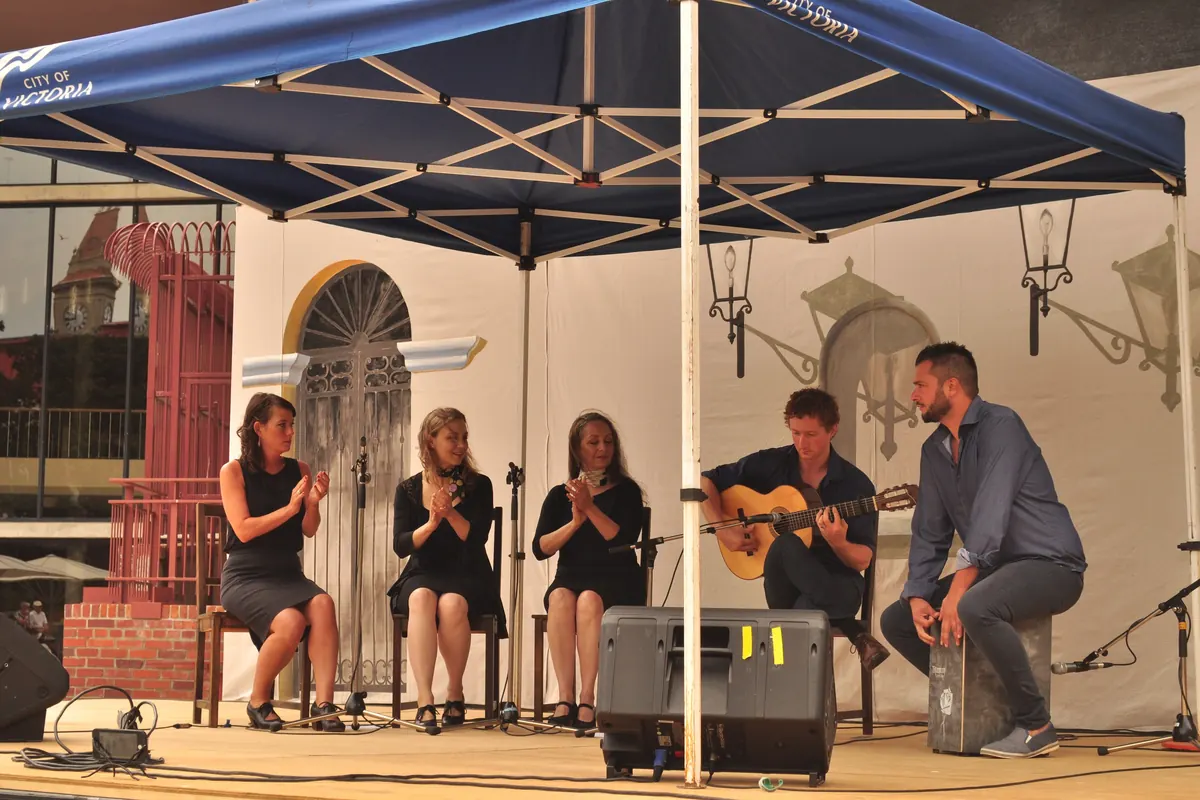
Flamenco was shaped in southern Spain. UNESCO describes it as an art fusing song, dance and guitar playing, with Andalusia as its core region and roots also in Murcia and Extremadura. Wikipedia dates its appearance to the late 1700s, in the towns and cities of Baja Andalusia, where Jerez de la Frontera left the first written trace. Wikipedia adds that its forms combine song, guitar, dance, compás, handclaps and footwork, and that more than fifty palos are catalogued. UNESCO's 2010 listing places flamenco among humanity's intangible cultural heritage.
The families who made it
UNESCO credits the Gitano community with an essential role in the growth of flamenco, and notes that it is handed down in families, in social circles and in flamenco clubs. Wikipedia describes it as an art form developed within the gitano subculture of Andalusia, and says Andalusia was the cradle of the early singers and of the three or four dozen gitano families who created and cultivated it. Wikipedia adds that the word flamenco first appears for the music in an 1847 newspaper article, which called it a gitano genre. That matters in Barcelona, because the city's flamenco story is also a family story, told through Romani families who settled and stayed.
How it reached a Catalan city
Flamenco travelled with people. Wikipedia's article on the Catalan rumba says the Romani communities of Barcelona were long established and bilingual in Catalan, and were influenced by heavy Andalusian immigration to the city in the middle of the 20th century. The flamenco article also places the rondeña of the guitarist Julián Arcas in Barcelona in 1860, as one of the first pieces regarded as flamenco guitar. Wikipedia adds that flamenco shows spread through Spain and the main cities of the world between 1920 and 1955, which is the setting for Carmen Amaya's career. The art form was a visitor here long before the tourist era, and the city has hosted it ever since.
Somorrostro and the seafront
Somorrostro is a beach in Barceloneta today. Wikipedia says that during the 19th century and part of the 20th, shacks covered the shore and about fifteen thousand people lived in more than two thousand of them, in a community known as Romani. Clearance began in 1966, and most of the shacks were gone between the 1960s and 1980s. The same article names two flamenco dancers born in the neighbourhood: Carmen Amaya and La Singla. The beach got its original name back only in 2010. A history of flamenco in Barcelona starts on that shoreline, among people who had very little.
Carmen Amaya
Nicknamed La Capitana, Carmen Amaya danced and sang; she was a Romani artist born in Somorrostro. Wikipedia says she was frequently called the finest flamenco dancer of all time, and that she was the first woman to master footwork previously reserved for the best male dancers. She sometimes danced in high-waisted trousers, and Her date of birth is disputed, because no birth document is available. As a child she went out at night with her guitarist father, and she made her stage debut at Barcelona's Spanish Theatre before performing in Paris. The critic Sebastià Gasch first wrote about her in 1931.
The Catalan rumba
The Catalan rumba developed in Barcelona's Romani community in the fifties and sixties. Wikipedia says its rhythms come from the Andalusian flamenco rumba, with influences from Cuban music and rock and roll, and that it began in the Gràcia, Raval and Hostafrancs neighbourhoods. It uses vocals and handclaps with guitar and percussion, and among its early artists Wikipedia names El Pescaílla and Peret. Cheap cassette tapes sold at petrol stations helped spread it, Gato Pérez rejuvenated it in the seventies, and the Gipsy Kings and Los Manolos carried its spirit to wider audiences later on. Thirteen rumba songs formed the final act of the closing ceremony of the 1992 Olympic Games. It is not flamenco, but it is a close cousin and entirely Barcelonan.
Two Catalan threads inside flamenco
Wikipedia's article on palos says the farruca and the garrotín were folk songs that probably originated in Asturias and Catalonia before reaching Andalusia, where they took on flamenco character. Its separate farruca article links the form to Galicia and says the exact origin has not been established. Wikipedia groups both with the four-beat tangos family. Treat the Catalan link as a likely thread and not as a settled fact. If a farruca appears on your night, it is a dance and guitar piece with a sober, dramatic character, and Carmen Amaya made a famous version of it.
Read next: Six palos to listen for
From café to tablao to theatre
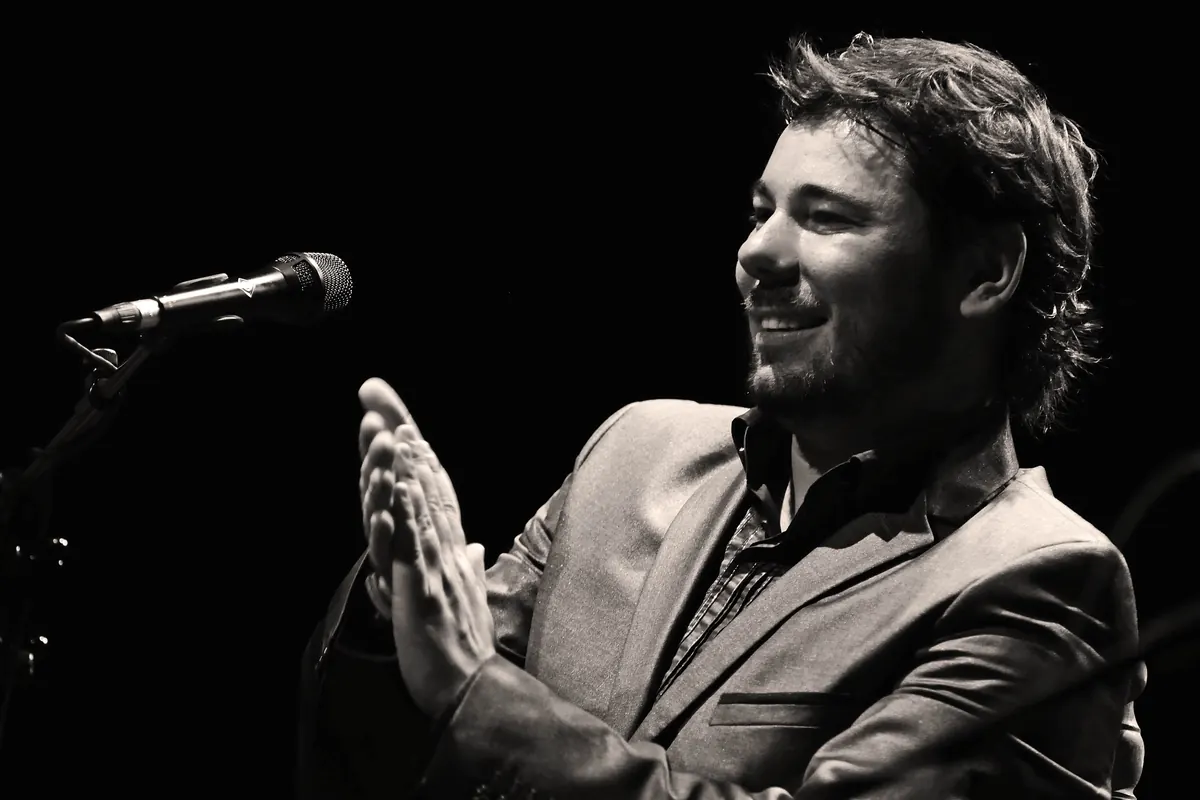
Wikipedia says that the cafés cantantes helped flamenco grow popular and produced the professional performer, and that tablaos, venues built around a flamenco stage, spread through the 1960s and replaced them. Shows were also staged in bullrings and theatres between 1920 and 1955, billed as flamenco opera. Tablaos are mostly found in Andalusia, often along the coast or in larger cities. A small theatre such as the one on Carrer dels Abaixadors belongs to that long habit of giving the art a stage.
A new generation in Barcelona
Flamenco is still taught and reinvented in the city. Wikipedia counts the Superior Music School of Catalonia as one of the schools that teach flamenco professionally, and the singer Rosalía studied at the Catalonia College of Music before reimagining flamenco with pop and hip-hop on her 2018 album El mal querer. Wikipedia says she also holds a master's degree in flamenco interpretation. The same article notes that some Romani people have accused her of cultural appropriation, a reminder that who owns flamenco is a living question and not a closed one.
What to take into the room
Go in knowing three things, and let them lower the pressure of a first flamenco night. First, the show is Andalusian art performed in a Catalan city, and both facts are true. Second, the songs are in Spanish and the programme changes with the cast, so you can listen for forms instead of waiting for a particular piece. Third, the audience is part of the sound: palmas and calls of encouragement are traditional, and the guide to palmas, jaleo and olé on this site explains how to join in without spoiling anything. Knowing a palo's history makes each piece richer, which is the aim of this site.
Read next: Palmas, jaleo and olé
Who this isn't for
These pages give background, and the show is not a lecture. If you want a spoken history or a museum tour with the music, the theatre's format will not provide it, and the sources below are better. The Somorrostro story is also a story of poverty and hardship, told here as the sources record it. If you want only the practical details of tickets and doors, go straight to the ticket guide or the arrival guide. If you would like to learn to dance, the venue's site lists flamenco classes separately.
Frequently asked questions
Is flamenco from Barcelona?
No. Its roots lie in Andalusia, with Murcia and Extremadura also named by UNESCO. Barcelona has a flamenco history of its own, including Carmen Amaya and the Catalan rumba.
Where was Carmen Amaya born?
In Somorrostro, a seafront district of Barcelona, into a Romani family, according to Wikipedia. The exact date is disputed.
What is Catalan rumba?
A music style that came out of the city's Romani families in the fifties and sixties. Its rhythms descend from the Andalusian flamenco rumba, mixed with Cuban and rock influences.
Is a tablao the same as a theatre?
Not quite. A tablao is a venue built around a flamenco stage, a format Wikipedia says spread in the 1960s. A theatre simply stages flamenco in a theatre room.
When did UNESCO recognise flamenco?
In 2010, when it was listed as intangible cultural heritage of humanity.
Did flamenco start in Catalonia?
No. Flamenco began in Andalusia, but Wikipedia says the farruca and the garrotín probably have Catalan and Asturian roots, and the Catalan rumba is a Barcelona creation.
Sources
- UNESCO page on flamenco, inscribed in 2010
- Flamenco (English Wikipedia article)
- Carmen Amaya (English Wikipedia article)
- Somorrostro (English Wikipedia article)
- Catalan rumba (English Wikipedia article)
- Palo (flamenco) (English Wikipedia article)
- Farruca (English Wikipedia article)
- Rosalía (English Wikipedia article)